The Merritt Island Seawall Question a Home Inspection Won't Answer
September 17, 2026
September 17, 2026
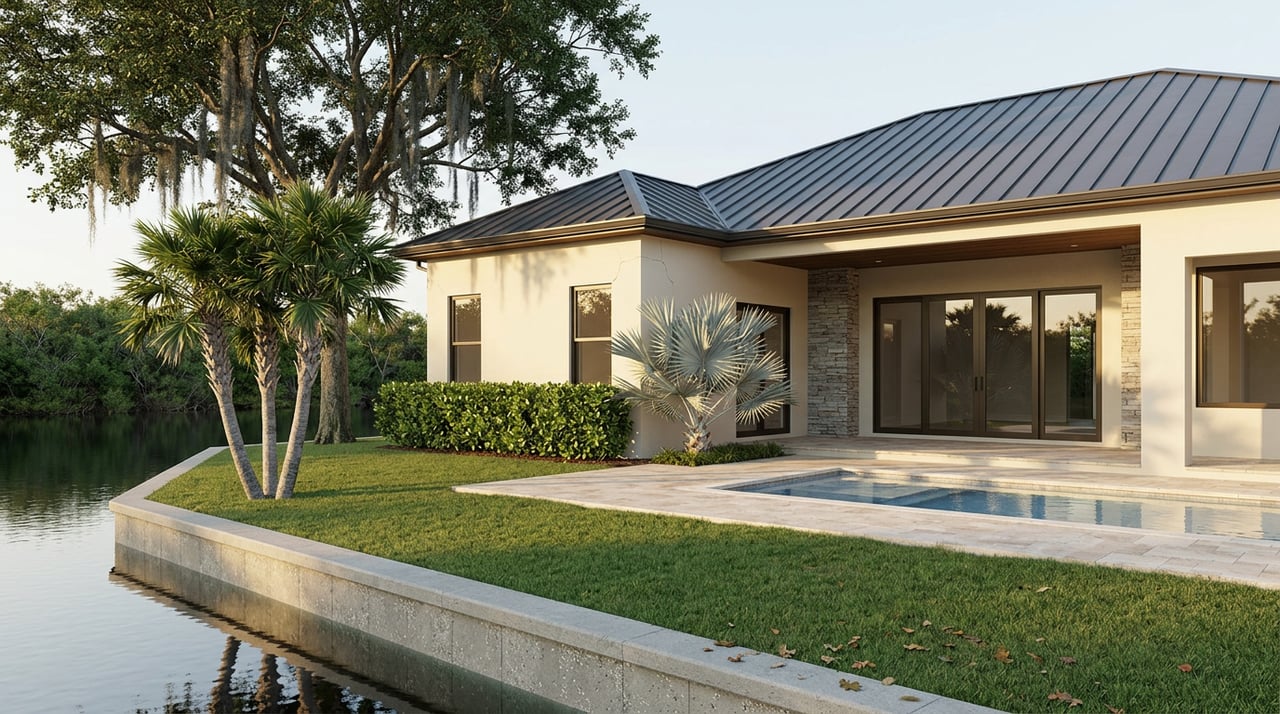
A canal-front home in Merritt Island can pass a full home inspection, sell without a single flag on the report, and still be sitting on a wall that is failing where nobody can see it. This isn't a scare story. It's a structural fact about how seawalls age and how Florida's inspection and disclosure process was built around the parts of a house that fail loudly, not the parts that fail quietly underwater and underground.
The one number that changes this conversation is the year the house was built. On Merritt Island, that single fact tells you more about seawall risk than a walk-through ever will.
Merritt Island's canal-front inventory carries a specific generational signature. A large share of it, including Holiday Cove and the older stretches along South Tropical Trail, went up between roughly 1963 and the mid-1970s, during the buildout that followed NASA's expansion on the Space Coast. If a seawall from that era was never replaced or significantly repaired, it is now somewhere between 50 and 60 years old.
South Tropical Trail itself runs from the FL-520 Causeway south to Mather's Bridge, a narrow corridor with the Indian River on one side and the Banana River on the other. It grew up piece by piece along an old citrus transport route, not as a planned subdivision, which is part of why the housing stock along it spans decades rather than sitting in one tidy cohort. That variance matters more than it looks. Walk that stretch today and you'll find lots where a 2024 or 2025 seawall sits a few properties down from a wall that has never been touched since the original pour. Two houses can look nearly identical from the street and carry completely different risk profiles below the waterline.
That's the mechanism worth understanding before you list. The construction date on a property record isn't just historical trivia. In Brevard County's estuarine environment, it functions as a proxy for material and corrosion exposure that no visual walkthrough can replicate.
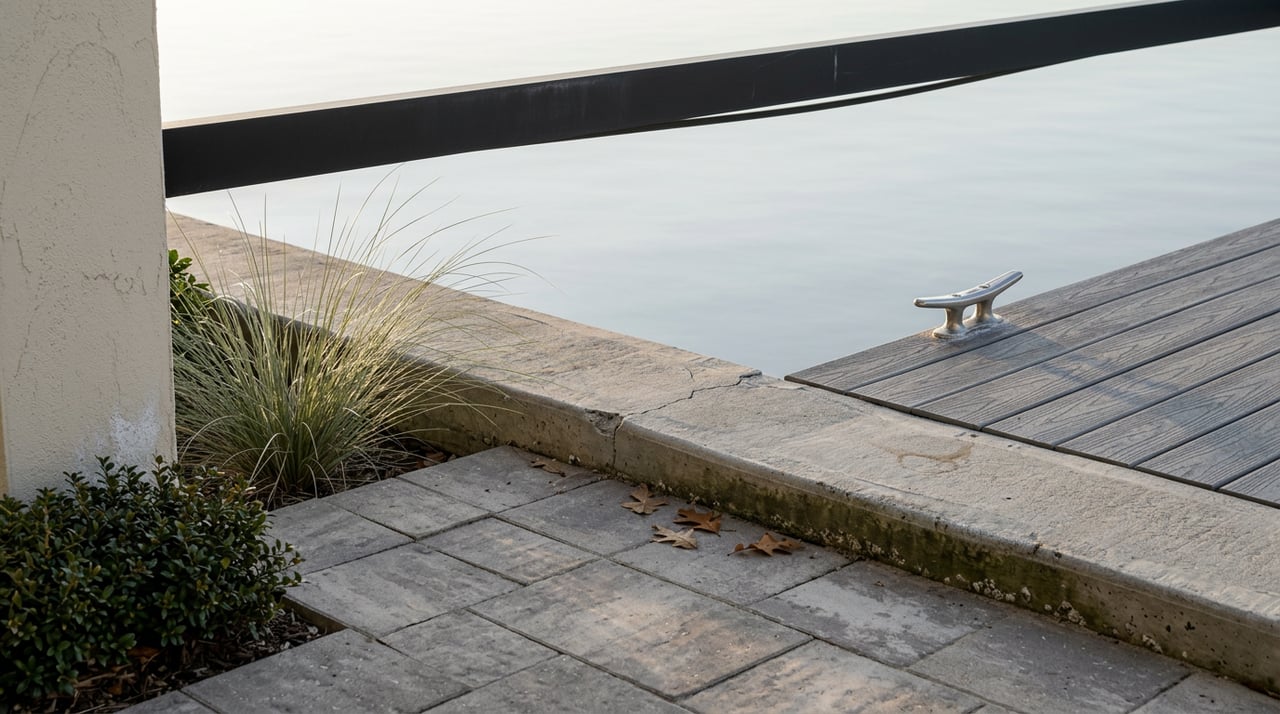
A seawall isn't one object. It's a system: the sheet pile or panel wall that holds back the soil, the cap beam running along the top that ties everything together, the tiebacks anchoring the wall to the yard behind it, and the weep holes that let built-up water pressure escape. Each piece can degrade independently, and the wall can look structurally sound from the dock while one of those components is already compromised.
Weep holes are the part almost nobody thinks about. They're small openings near the waterline designed to relieve hydrostatic pressure building up in the soil behind the wall. When they get blocked by sediment, root intrusion, or mineral buildup, that pressure has nowhere to go. Brevard's summer storms can drop several inches of rain in a matter of hours, and a wall with clogged drainage takes that pressure event after event with no outlet. This is the kind of detail a standard home inspector isn't trained to evaluate and a buyer walking the yard during a showing has no way to spot.
Add saltwater and brackish exposure to that picture. The Indian River Lagoon and Banana River corrode steel and aluminum components far faster than freshwater installations would, which is exactly why coastal seawall lifespans and inland lakefront seawall lifespans aren't comparable numbers. A wall's age tells you how many decades of that exposure it has already absorbed.
Florida sellers operate under the Johnson v. Davis standard, which requires disclosing known facts that materially affect a property's value and aren't readily observable to a buyer. Unpermitted work carries its own statutory teeth too. Florida Statute 553.79 requires disclosure of unpermitted improvements, and sellers who skip that step can face real legal exposure if it surfaces later.
Where this gets misunderstood is the flood disclosure form. Since October 1, 2024, Florida law has required sellers to provide a written flood disclosure, commonly called the FD-1 form, at or before contract signing. It's a meaningful requirement, but it answers three narrow questions: is the property in a flood zone, has the seller filed a flood insurance claim, and has the seller received flood-related government assistance.
None of that touches the seawall. The form says nothing about cap age, tieback condition, or when the wall was last inspected. A seller can complete that disclosure in full, in good faith, and still say nothing about a wall that hasn't been evaluated in decades, simply because the form never asks. And an as-is contract doesn't close that gap either. Selling as-is means the buyer accepts the property's condition, but it doesn't remove the seller's obligation to disclose known material defects that aren't visible on a walkthrough.
| What's required | What isn't |
|---|---|
| Flood zone status, flood claims, flood assistance (FD-1) | Seawall age, material, or last inspection date |
| Known material defects not visible to a buyer (Johnson v. Davis) | Routine seawall maintenance history unless the seller has actual knowledge of a problem |
| Unpermitted work, once known (F.S. 553.79) | A pre-listing marine inspection, which is optional but strongly advisable |
Brevard County treats marine construction as its own animal. Residential Marine permits cover the installation or replacement of docks, seawalls, and boat lifts in canals and other manmade waterways, and that permit does not ride along on a building permit the way a kitchen remodel might. It's a standalone category, filed and tracked separately through the county's permitting system.
Merritt Island carries an additional layer most sellers never hear about until it's relevant. The county maintains a distinct Barrier Island Area of Critical State Concern planning designation covering the beachside and Merritt Island communities, and work in that area picks up review that inland Brevard projects simply don't see. If a seawall repair or replacement happened on a Merritt Island canal lot without going through that process, there may be no permit record at all, which means no documented evidence of what was actually done or how it was inspected.
That absence of a paper trail is its own kind of risk. A wall repaired without a permit might be perfectly sound, or it might have been patched by someone without marine construction experience. Without a permit record, a buyer's due diligence has nothing to check against.
Sellers who get ahead of this conversation control when and how it happens. Waiting for a buyer's inspection period to raise it means negotiating from a number you didn't choose and a timeline you don't control.
For some owners, this is exactly the kind of problem that makes a traditional listing feel like the wrong tool. A 55-year-old wall with no permit history, a home that needs the cap redone before it will pass a buyer's inspection, or simply the time and cost of managing marine contractor bids while trying to sell the house isn't a small ask for someone who just wants to move on.
That's the situation Martin Castellon built BrightBridge Holdings to solve. As a Sharpes-based investor with construction background and a Florida real estate license, Martin can walk a Merritt Island property once, assess what the seawall situation actually means for value, and make a fair as-is offer that accounts for it rather than asking a seller to fix it first. For owners who'd rather sell through the retail market with full disclosure handled correctly, he can do that too.
Does Florida require a seawall inspection before selling a waterfront home? No. There is no statutory requirement for a pre-listing seawall inspection. The obligation is to disclose known material defects that aren't visible to a buyer, which means an inspection is the tool that lets a seller know what they're required to disclose in the first place.
Can I sell my Merritt Island canal home as-is if the seawall needs work? Yes. An as-is sale means the buyer accepts the property's condition and typically keeps their inspection period rights, but it doesn't remove the seller's duty to disclose known issues that aren't obvious from a walkthrough.
How do I find out if my seawall was ever permitted? Brevard County's Residential Marine Construction permits are tracked separately from building permits. A search through the county's building permit records, cross-referenced with the property's construction date on the county appraiser's card, is the starting point for establishing what work has and hasn't been documented.
If your Merritt Island property has a seawall question you haven't had answered yet, reach out to Martin for a straightforward look at what it means for your sale and which path actually makes sense. Get Your Cash Offer Today.
Stay up to date on the latest real estate trends.

Get a no-obligation cash offer from Martin — no listings, no showings, no waiting.