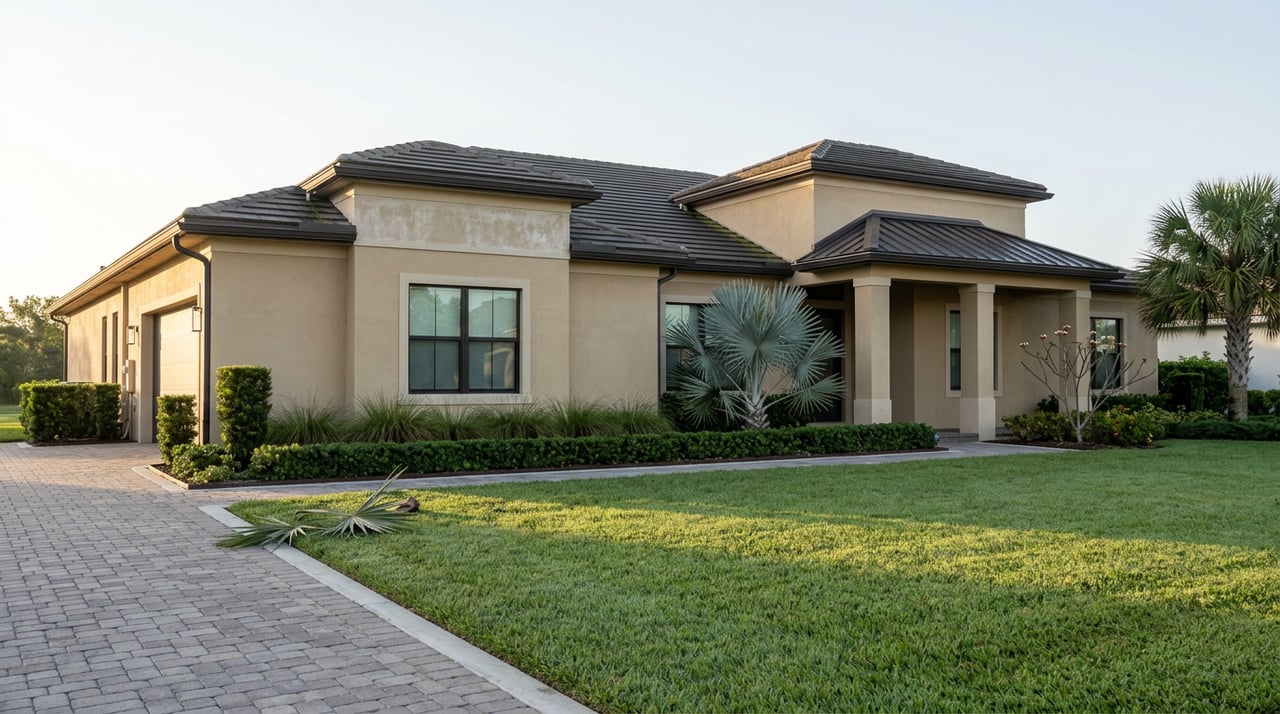
In Port St. John, Which Side of Fay Boulevard You're On Can Cost You Tens of Thousands Before You Sell
September 10, 2026
September 10, 2026
Rosemary Augustine did not pick her house because of which side of Fay Boulevard it sat on. Nobody does. But when Brevard County pushed septic-to-sewer conversions forward in Port St. John earlier this year, that single detail decided her bill. Her home sits on the side of the four-lane divided highway where the sewer main hasn't arrived yet, so connecting means running new pipe across the street to reach it. A neighbor two hundred feet away on the other side faces a fraction of the cost, simply because the pipe is already under their yard.
That gap is the real story sitting underneath every generic "septic vs. sewer" guide written about Florida. The cost of a Fay Boulevard cross-highway connection runs $60,000 to $100,000 per home, according to reporting by News 6 Community Correspondent James Sparvero in March 2026. Augustine, who reached out through the station's Neighborhood Network, had been approved for a $12,000 grant through Brevard's Save Our Indian River Lagoon program. That grant doesn't close the gap. It barely dents it.
Florida's septic push isn't new, but the deadline is getting closer. Under the state's Indian River Lagoon Protection Program, any home on a conventional septic system within the protection area has to either connect to central sewer, if a line is available, or upgrade to a nitrogen-reducing system by July 1, 2030. The reasoning is straightforward. A conventional septic tank only removes 10 to 40 percent of the nitrogen in wastewater before it reaches groundwater, and that nitrogen eventually surfaces as algae blooms in the lagoon. Brevard funds the push through a half-cent sales tax dedicated to Save Our Indian River Lagoon, which has generated roughly $560 million since 2016.
For homeowners, the mandate arrives as a letter, not a suggestion. Brevard County mailed Fay Boulevard residents notices earlier this year outlining the requirement, and when the projected cost sparked pushback, the county sent a follow-up letter in March 2026 softening its tone. The new letter states it is not the county's intent to impose an unreasonable financial burden on property owners based on the costs currently being quoted, and it dropped earlier language threatening fines or service restrictions if homeowners didn't connect within a year. The mandate itself didn't go away. Only the enforcement clock did, for now.
Brevard runs a few overlapping programs meant to soften the cost, and it helps to see them side by side, because the amounts vary a lot depending on which one applies to your street.
| Program | What it covers | Typical amount |
|---|---|---|
| SOIRL minimum grant, approved December 2025 | Baseline grant for any property in the Project Plan area, regardless of nitrogen loading | $6,000 |
| SOIRL septic upgrade grant | Replacing a conventional tank with an advanced nitrogen-reducing system when a sewer connection isn't feasible | Up to $20,000 |
| Fay Boulevard cross-highway connection, reported March 2026 | Actual quoted cost for homeowners whose nearest sewer main sits on the opposite side of the divided highway | $60,000 to $100,000 |
Even the higher grant tier covers well under a third of the low end of what some Fay Boulevard homeowners are being quoted. Augustine's plumber, Jeff Rice of J. Rice Plumbing, put it plainly to News 6: "It's not gonna be cheap, no matter what." In a later interview he raised a point that matters more to a seller than to a homeowner planning to stay put. Speaking about older homes on Fay, he said he wasn't sure the home values were even worth what it would cost to connect.
That's not a plumbing problem. That's a pricing problem, and it shows up at the closing table, not the permit office.
Here's where the mandate stops being an infrastructure story and starts being a real estate one.
Florida is a caveat emptor state, which means sellers aren't required to go hunting for defects on their own property. But once something material is known to you, like a mandatory connection notice already sitting in your mailbox, the standard shifts. Florida Realtors has walked through a real ethics case turning on exactly this kind of gap between septic and sewer status, and the takeaway holds here: a connection requirement you already know about isn't something a buyer can discover just by touring the house. It belongs in the disclosure, not in a conversation after the inspection.
Financing adds a second layer of friction. Lenders underwriting FHA and VA loans typically want a functioning, code-compliant wastewater system before they'll close, and a documented mandatory-connection notice on a property can complicate an appraisal even when the tank itself is still working. That doesn't disqualify every buyer, but it shrinks the pool, and it shrinks it fastest for exactly the kind of financed, first-time or move-up buyer who makes up most of the traffic on a median-priced Port St. John listing.
The market context makes that shrinkage sting more. Port St. John homes have been selling in the low $300,000s to high $300,000s range on the comp sheets. None of that tells you which side of Fay Boulevard a given house sits on. A buyer scanning two listings at similar prices and similar square footage has no way of knowing that one of them is carrying a $60,000 to $100,000 liability the listing sheet doesn't show.
If you've received a notice, or you know your street sits inside a project area, you're generally looking at one of two paths.
Neither path is wrong. What matters is knowing which one you're actually in before you sign a listing agreement, not after a buyer's lender flags the notice three weeks into a contract.
Does every home in Port St. John have to switch from septic to sewer? Only homes inside the Indian River Lagoon Protection Program area, and only if a sewer connection is available or becomes feasible. State law sets the outer deadline at July 1, 2030 for connecting or upgrading to a nitrogen-reducing system.
If my septic tank is working fine, do I still have to tell a buyer about a pending connection notice? If you've already received a notice from the county, that's a known material fact once it's in your hands. Florida's disclosure standard is built around what you actually know, not just what's visibly broken, so a mandatory connection notice belongs on the table before closing.
Will a buyer's lender care if my system currently passes inspection? It can still matter. FHA and VA underwriting typically looks for a functioning system, but a documented mandatory-connection requirement on the property can raise questions during appraisal even when the tank itself passes on its own.
What if my street hasn't been notified yet? You're not under an active notice, but the underlying law still applies across the protection area. If a connection becomes feasible before 2030, expect a letter eventually. Brevard's Save Our Indian River Lagoon office keeps a mapping tool showing which properties fall inside current project areas.
If you're staring down a conversion bill you never budgeted for, on a house you were planning to sell rather than renovate, that's exactly the kind of situation Martin Castellon built his cash offer around. One walkthrough, a fair all-cash number, and a closing that doesn't wait on a permitting queue or a grant approval letter. Get Your Cash Offer Today.
Stay up to date on the latest real estate trends.

Get a no-obligation cash offer from Martin — no listings, no showings, no waiting.